
Quickstep Rewards Technique, Not Energy
- Janet Bosson
- May 22, 2025
- 2 min read

Quickstep is one of the happiest dances in the ballroom, full of sparkle, speed and excitement. But don’t confuse that excitement with frantic movement.
The best Quickstep dancers don’t use more energy—they use better technique.
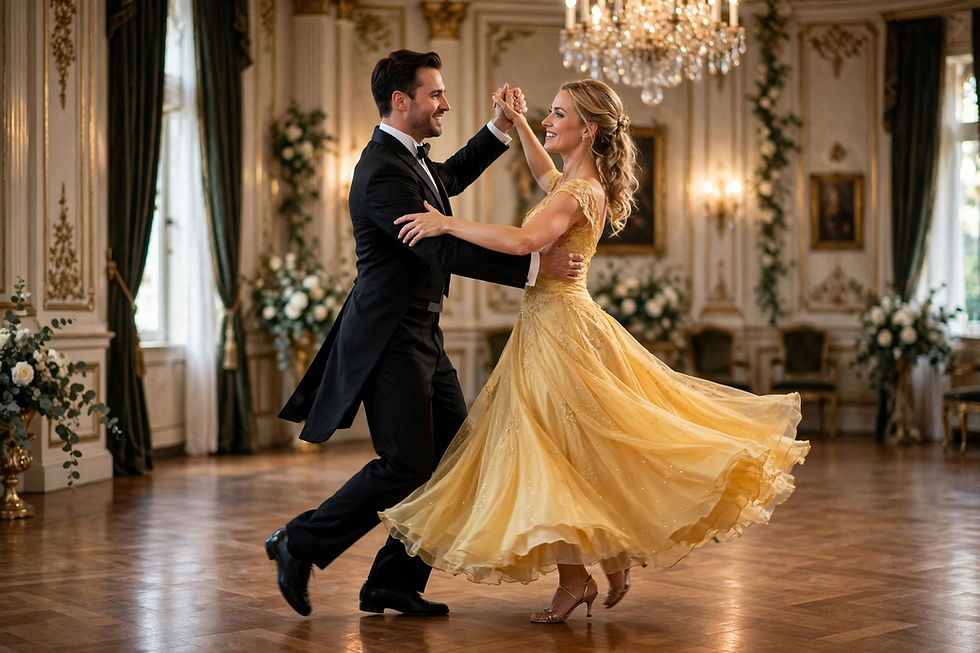
If you rely on energy alone, you’ll soon become tired, lose your balance and begin chasing the music. Your frame will rise and fall too much, your feet will get ahead of your body, and your partner will struggle to stay connected.
Technique is what creates the illusion of effortless speed.
It starts with posture. A tall, lengthened spine with a stable core allows the body to move freely while keeping the topline calm and elegant.
Next comes drive. Every progressive movement begins by pushing from the standing leg. Power comes from the floor, not from taking bigger or faster steps.
As you drive, your body flight should begin before the moving foot lands. Your centre travels smoothly through space, while the feet simply catch and support the body’s momentum.
Quickstep also relies on swing. The body swings naturally through each step, creating flowing movement rather than separate actions. The swing should come from the movement of the body—not from throwing the shoulders or using the arms.
Then there’s footwork.
Correct heel leads, toe pushes and rolling through the feet allow you to skim across the floor. Every foot placement should be precise, every weight transfer complete. Untidy footwork wastes energy and destroys the lightness that Quickstep is famous for.
The knees and ankles act like shock absorbers. They flex and extend continuously, giving the dance its soft, buoyant quality. This is very different from bouncing. The rise comes from controlled use of the feet and legs, not from jumping into the air.
A skilled couple also understands CBM (Contra Body Movement) and CBMP (Contra Body Movement Position). These actions help initiate turns efficiently, keeping the movement flowing and preventing the couple from pulling each other off balance.
As the dance develops, sway helps shape figures naturally. Sway is a response to swing and movement—it should never be forced by leaning the upper body.
Perhaps the greatest technical challenge is maintaining a quiet upper body. While the legs and feet are working quickly underneath, the head, shoulders and arms should remain composed. Watch the world’s best couples and you’ll notice that their feet seem to fly while their topline barely moves.
Finally, there is musicality.
Quickstep is fast, but it should never feel rushed. The timing must be crisp and controlled, allowing each chasse, lock step and progressive movement to fit comfortably within the music.
When all these technical elements come together, something magical happens.
The couple appears weightless.
They don’t look as though they’re working hard.
They simply float, swing and fly effortlessly around the ballroom.
That’s why Quickstep rewards technique—not energy.
Comments